Clear films
The layer that takes the hit instead of your paint
A rock does not care how much the car cost. HAUT paint protection film puts 6.3 to 8.3 mil of self-healing urethane between the road and your paint — optically clear, warrantied for ten years, and installed only by shops we have certified.
- Master Plus — thickest film
- 8.3 mil
- Master — the everyday film
- 7.7 mil
- Mist — satin finish
- 6.3 mil
- Limited warranty
- 10 yr
- Four clear films6.3 to 8.3 mil, gloss through flat matte, all on the same protective platform.
- Published test methodsEvery value that publishes carries the ASTM method it was measured to — and none publishes before it is measured.
- 10-year warrantyCracking, delamination and blistering — registered by the owner.
- Certified installationEvery certified bay cuts from the same pattern library, so a quote is the real cut.
What it does
Four properties decide how the car looks in year eight
Film is bought on four things. Here is what each one is, the ASTM method that measures it, and what it turns into on the panel years later. The figures for the film sold in the United States publish per film as the US laboratory reports come in.
- D882
- Tensile strength and elongation ASTM
- D1003
- Transmittance and haze ASTM
- D3330
- Peel adhesion ASTM
- D2240
- Shore A bulk hardness ASTM
Impact absorption
The urethane stretches under a stone and returns, which is what turns a strike into a dent that rebounds instead of a chip that reaches clear coat. Tensile strength and elongation to ASTM D882 are how that is measured; the figures publish per film with its report.
Optical clarity
White and silver cars expose a cloudy film instantly. Transmittance and haze to ASTM D1003 are the two numbers that say whether a clear film reads as paint, and they publish per film when its report is in hand.
Self-healing topcoat
Wash swirls and light marks close under warm water or sun. The panel keeps looking new instead of collecting a season of micro-scratches.
Stability over years
Cracking, delamination and blistering — the three ways a film fails structurally — are what our warranty covers, for ten years, on film a certified shop installed.
Edge behavior
Peel adhesion is the one figure you want in the middle: enough to hold a wrapped edge through a decade of pressure washing, low enough that the film comes off cleanly when it is time. Measured to ASTM D3330, published per film with its report.
Installer-friendly stretch
Film that fights the installer ends up with stress marks and lifted corners. Ours stretches into a bumper corner and stays there.
Construction
Four layers between the road and your paint
Most specification arguments in this category come from comparing numbers that describe different layers of the film. Read the stack first and the spec sheet stops being confusing.
- 01
Coating
The self-healing topcoat. An elastomeric, lightly crosslinked surface — warm it and the network's own elasticity pulls light marking back out. Thin by design: thickness added here would only add haze.
- 02
Base film — urethane
The impact layer, and almost all of the thickness. It takes the energy out of a stone by stretching and returning to shape, which is the property measured as tensile strength and elongation at break.
- 03
PSA glue
A pressure-sensitive acrylic layer tuned to hold through years of heat cycling and still release cleanly. Measured as 180° peel after a stated dwell, and as initial tack — the property an installer feels in the first ten seconds.
- 04
Your paint
Clear coat, base coat, primer. Everything above exists so that this stops being a consumable.
The range
4 clear films. One decision.
They all protect. They differ in how thick they are and what finish they leave. Where a cell is empty, that property has not been measured on that film yet.
| Film | ThicknessASTM D6988 | Finish | Warranty |
|---|---|---|---|
| MasterThe everyday clear film — 7.7 mil, optically clear, self-healing. | 7.7 mil · 195 µm | High-gloss clear | 10 years |
| Master PlusThe heavy one — 8.3 mil, the thickest film HAUT makes. | 8.3 mil · 210 µm | High-gloss clear | 10 years |
| MistSatin finish, clear film — turns gloss paint matte and protects it. | 6.3 mil · 160 µm | Satin | 10 years |
| VelvetTrue flat matte — no sheen at all. | — | Flat matte | 10 years |
An em-dash means that film carries no specified value for the column, not that it performs badly. Thickness and finish are the specification each film is made to. Performance values — transmittance, tensile strength, elongation, adhesion, hardness, weathering — are being measured on the film sold in the United States at a US laboratory, to the ASTM methods listed on the test-methods page. A value is published for a film only once that film's report is in hand, with the method beside it. Until then the row is left out rather than filled in.
Master
The film to spec when the customer wants their paint protected and does not want to be able to tell.
Spec MasterMaster Plus
For cars that get driven hard, parked outside, and take the impacts a thinner film would pass straight through to the paint.
Spec Master PlusMist
For owners who want the factory-satin look without repainting, and for factory satin cars that need protecting.
Spec MistVelvet
The flattest finish HAUT makes, for builds that reject shine entirely.
Spec VelvetCoverage
How much of the car to cover
Coverage is priced by panel, so the decision is really about where your car takes damage.
Partial front
Bumper, the leading section of the hood and fenders, and mirror caps. The lowest-cost way to cover the panels that take the most hits, with a visible line across the hood.
Full front
Bumper, full hood, full fenders, mirrors and headlights, wrapped at the edges. No line across the hood, and the most common job in a PPF shop.
Track pack
Full front plus rocker panels, A-pillars, roof leading edge and the area behind the wheels — every surface debris reaches at speed.
Full body
Every painted panel. The choice for a car that will be kept, and the only coverage that protects resale value across the whole vehicle.
The coverage page lists every panel in every package, so you can ask for a panel list rather than a package name. Pricing depends on the vehicle, the coverage and the shop. A certified installer will quote your exact car — every HAUT shop runs the same pattern library, so a quote is based on the real cut, not a guess.
How it happens
From quote to warranty in four steps
What actually happens between calling a shop and having coverage on file.
- 01
Get a quote
Find a certified HAUT shop and tell them the vehicle and the coverage. They pull your car from a catalog of 2,500+ patterns and price the real cut.
- 02
Prep the paint
The panels are washed, decontaminated and, where needed, corrected. Film locks in whatever is underneath it — good shops fix that first.
- 03
Install
Panels are plotter-cut and wrapped at the edges so no cut line shows. A full front is typically a day; a full body is several.
- 04
Register the warranty
Your installer gives you the job details. You register online in about two minutes and your 10-year coverage is active.
On the car
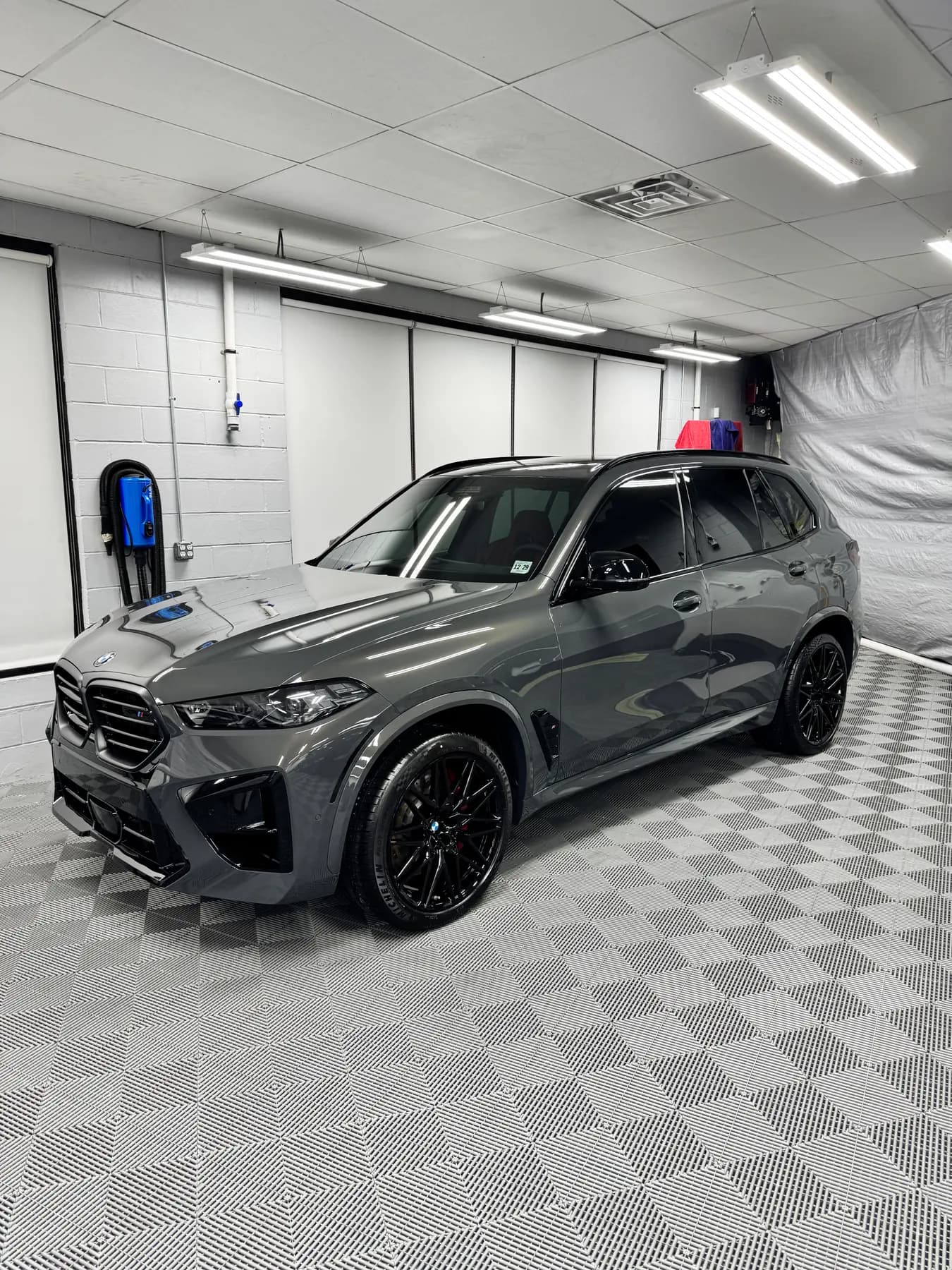
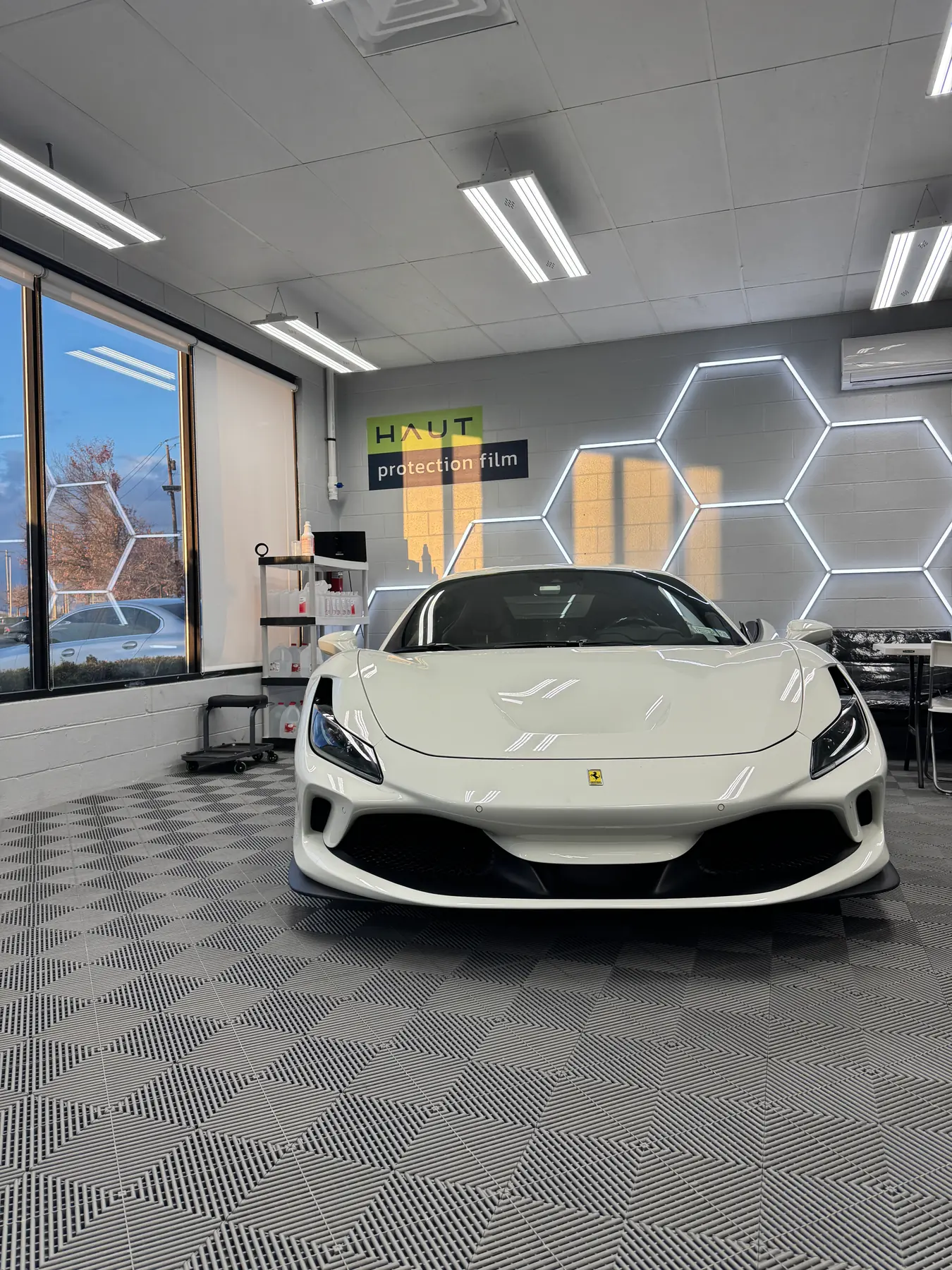
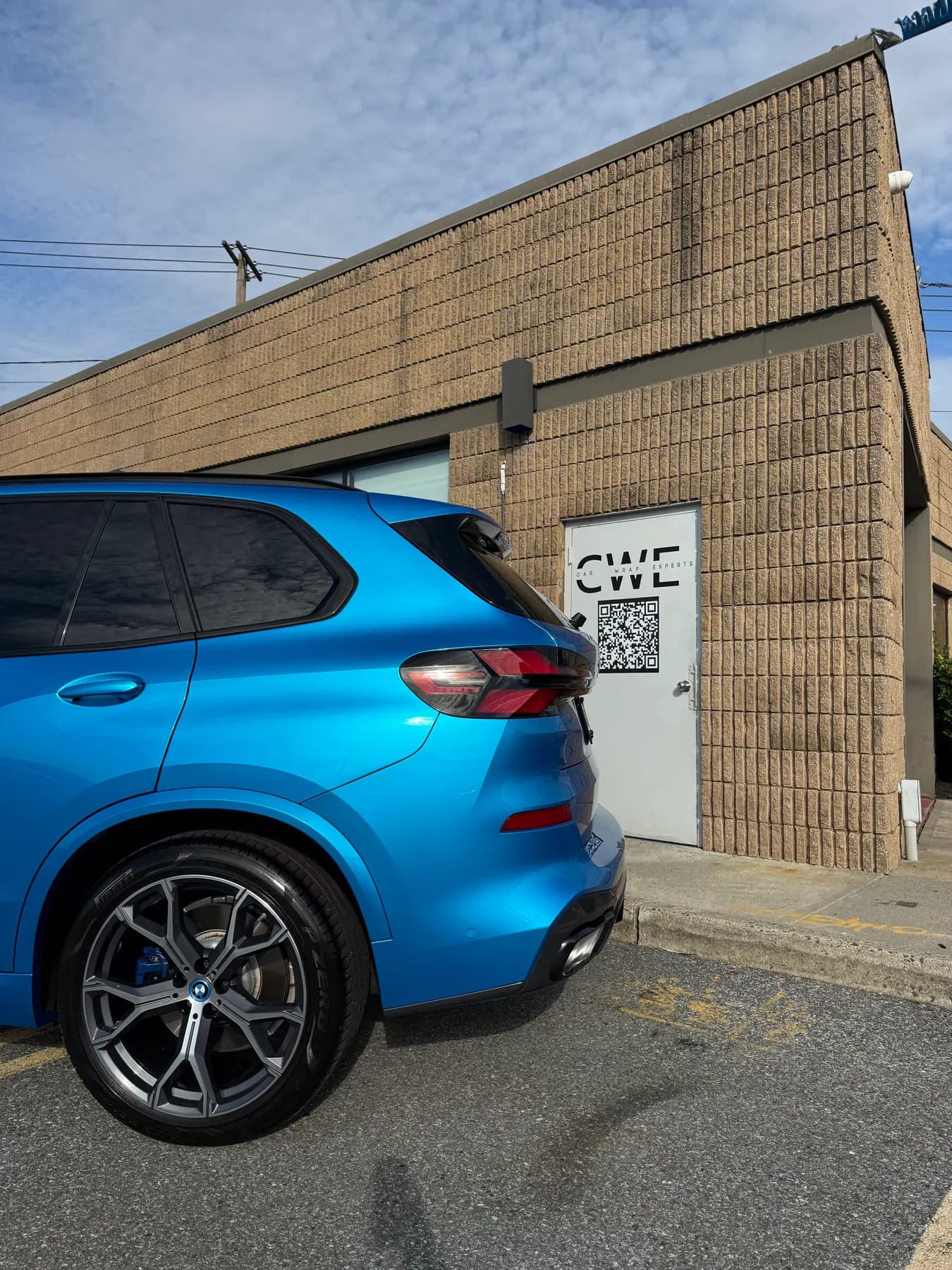
What it looks like when it is done right
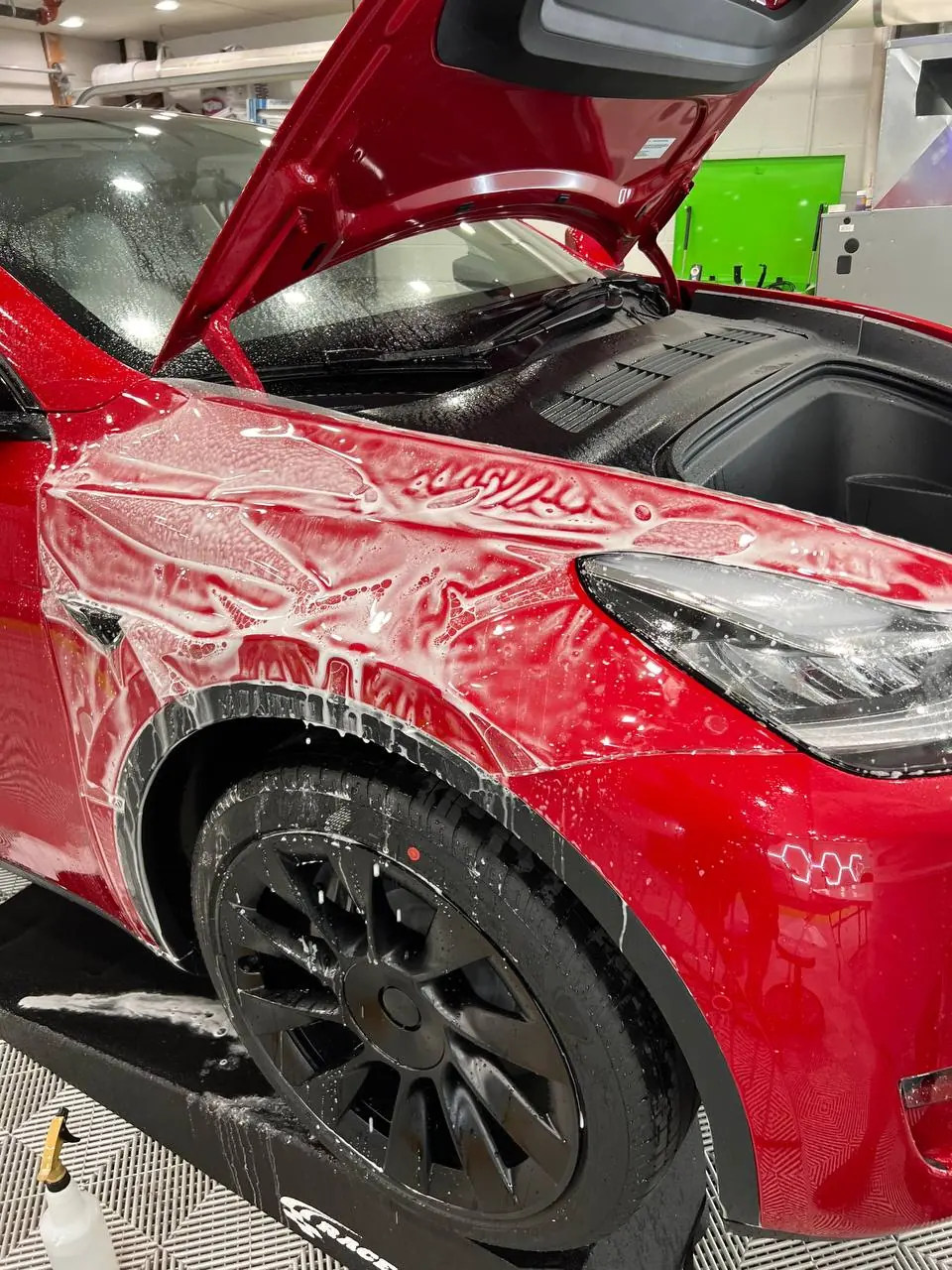
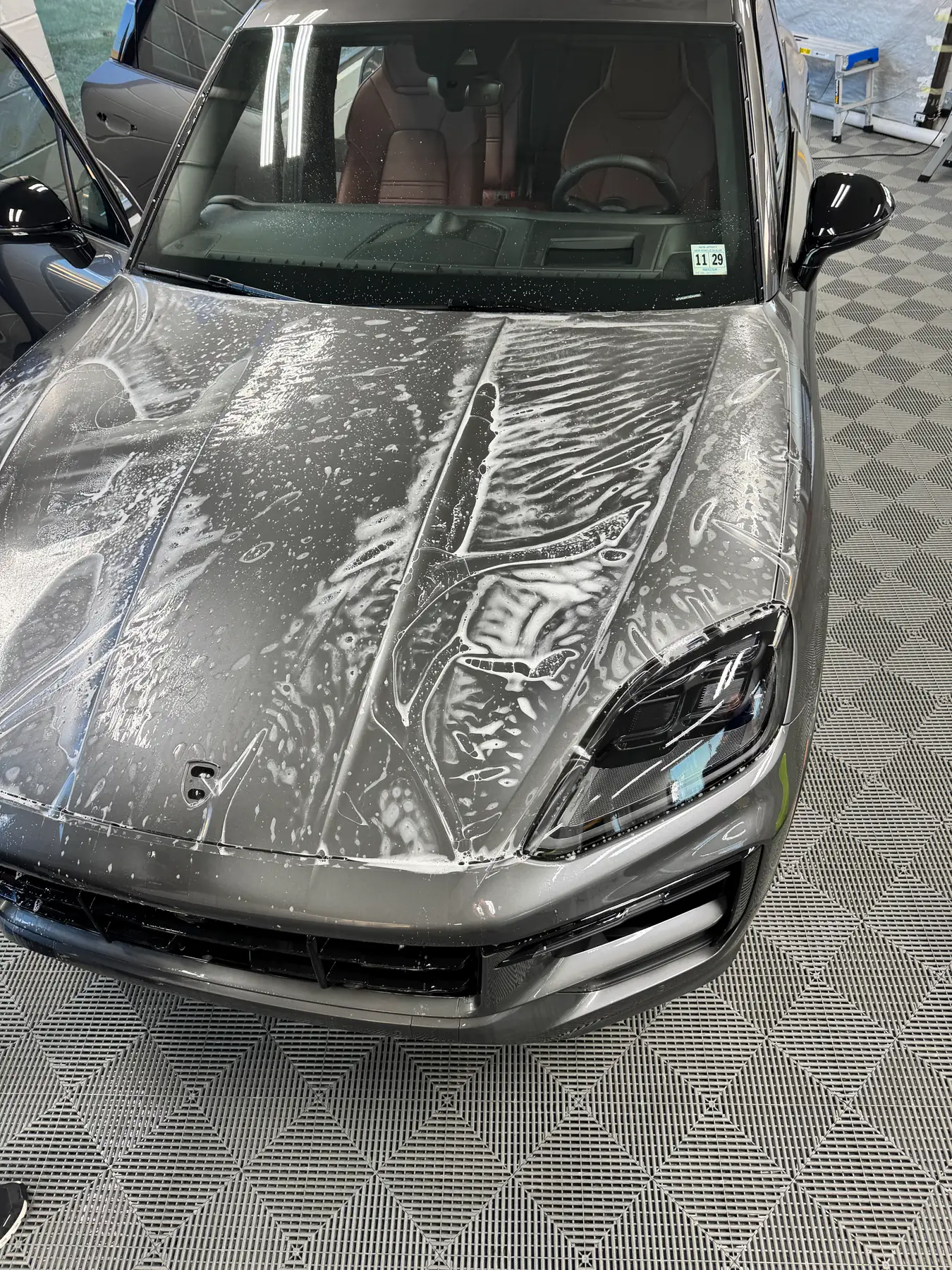
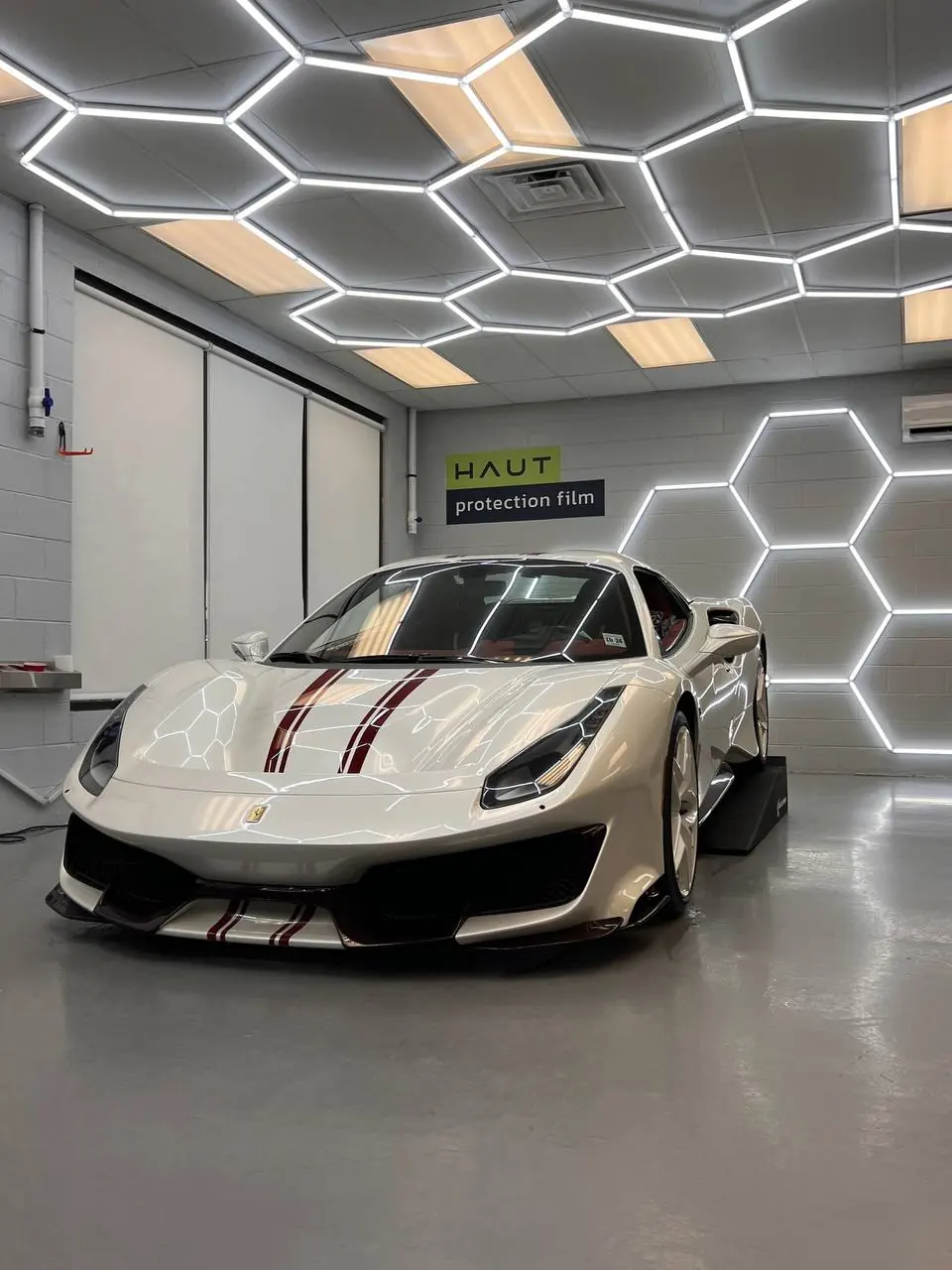
Clear film on customer cars, photographed in the bay it was installed in. The edge you cannot find is the point.
Paint protection film, answered
Get your car covered
Certified shops only — trained on our film, cutting from our patterns, and the only ones whose work carries the 10-year warranty.