For car owners
Paint protection film for the car you actually drive
Paint protection film takes the rock chips, bug acid and wash grit off your paint so the paint stops being a consumable. Here is what ours measures, how much of the car to cover, and what the 10-year warranty actually says.
- Thickest film — Master Plus
- 8.3 mil
- Thinnest — Interior
- 6.3 mil
- On customers' cars before open sale
- 6 yr
- Limited warranty
- 10 yr
- We make the filmNot a badge on someone else's roll. We manufacture it, we cut it, and we fit it ourselves at HAUT Flagship Studio in Hackensack.
- 10-year warrantyCracking, delamination and blistering — registered by you, in two minutes.
- Certified shops onlyThe warranty follows the certification. Every certified bay cuts from our pattern library.
- Fully reversibleComes off with heat, leaving the factory paint in the condition it went on in.
What it is
A layer thick enough to take the hit
Paint protection film is 160 to 210 microns of self-healing urethane bonded to your paint. It is not a coating, not a wax and not a treatment — it is a physical barrier, and thickness is the reason it works.
- 210 µm
- Master Plus — 8.3 mil, our thickest ASTM D6988
- 195 µm
- Master — 7.7 mil ASTM D6988
- 160 µm
- Mist and Interior — 6.3 mil ASTM D6988
- 190 µm
- Specter — 7.5 mil ASTM D6988
It stops rock chips
The urethane stretches and absorbs the energy of a stone, then returns to shape. That is the one job no coating or sealant can do, and thickness is most of why it works.
It heals its own swirls
The topcoat is elastomeric. Warmed by sun, warm water or a heat gun, light wash marks close up instead of accumulating into a season of haze on the hood.
You are not supposed to see it
On the colors that expose a weak film — white, silver, light metallics — a good clear film reads as paint. Transmittance and haze are measured to ASTM D1003, and each film's figures publish when its US laboratory report is in hand.
It comes off again
Heat and a steady pull, and the factory paint underneath is unfaded and unchipped. On a lease going back at term, or a car being sold, that is the entire return on the job.
The range
Which film goes on your car
Four clear films and four color films, separated by thickness and by the finish they leave. Every one of them self-healing, every one covered for ten years.
An em-dash means that film carries no specified value for the column, not that it performs badly. Thickness and finish are the specification each film is made to. Performance values — transmittance, tensile strength, elongation, adhesion, hardness, weathering — are being measured on the film sold in the United States at a US laboratory, to the ASTM methods listed on the test-methods page. A value is published for a film only once that film's report is in hand, with the method beside it. Until then the row is left out rather than filled in.
Coverage
How much of the car to cover
Film is priced by panel, so the real question is where your car takes damage. These are the four jobs a certified shop quotes most often — the coverage page lists every panel in each one.
Partial front
Bumper, the leading section of the hood and fenders, and mirror caps — the panels that take the overwhelming majority of stone strikes.
Full front
Full bumper, full hood, full fenders, mirrors and headlights, with the film wrapped around the panel edges instead of cut on the face.
Track pack
Full front plus the surfaces debris reaches once the car is moving quickly: rocker panels, A-pillars, roof leading edge, and the paint behind each wheel.
Full body
Every painted panel on the car, wrapped at the edges.
Ask your installer for a panel list rather than a package name — it is the only version of the question that gets you the same answer from two different shops.
The part that decides everything
Judge the shop, not just the film
Almost every horror story in paint protection film is an install problem. Same film, same warranty, two shops, and one car comes back with a black line down every panel edge. Here is what to look at.
Look at the edges, not the middle
Film should wrap around a panel edge, not stop on its face. A trimmed edge is faster and cheaper, and it is the one that lifts and packs with dirt you can never clean out. Run a fingernail along a fender edge on their demo car.
Ask for a white car they did a year ago
White and silver expose everything — a grey cast, a yellow tint, every lifted corner. A shop proud of its year-old white cars is telling you something a portfolio of fresh installs cannot.
Look for dust, not for gloss
Anything trapped under the film is there for a decade. Look across a hood at a low angle, in daylight. Then ask to see the room your car will actually be filmed in.
Ask what comes off the car
Bumper, lights, handles, badges. Removing them is hours of labour and the reason an install becomes invisible rather than merely tidy. A shop that films around a badge is saving its own time, not yours.
Ask about repainted panels
Film pulls repainted paint far more often than factory paint. A shop that checks your car for respray before it quotes — and tells you which panels it will not warrant — is the one protecting you.
Ask who registers the warranty
Ours is registered online against your vehicle in about two minutes, so a claim in year eight starts from our record rather than a card in your glovebox. Ask to read what the 10 years actually cover before you pay, not during a claim.
What it costs
Nobody in this industry will tell you. We will tell you how it is built.
Not a price — a price on a web page is a number for somebody else's car. What we can give you is the mechanics of the quote, what belongs on it line by line, and the questions that stop you being overcharged.
The vehicle
A bumper with six sensors, a splitter and three compound curves is not the same job as a flat sedan hood. The pattern for your exact model decides how much film is used and how many hours the bay is occupied.
The panel list
Coverage is priced by panel. Going from a full front to a track pack adds real hours; going to a full body multiplies them.
The condition of the paint
Film locks in whatever is underneath it. If the paint needs decontaminating or correcting first, that is a separate piece of work — and a shop that skips it is not doing you a favor.
Every certified HAUT shop quotes from the same pattern library, so the price you are given is based on the real cut for your car. Read what moves the number before you collect quotes.
How we got here
Six years of field data before a single roll was sold
The first HAUT roll came off the line in 2020. It went to a closed network of partner shops for 6 years, on the condition that they reported back, before it was ever sold openly.
The full storyThe work
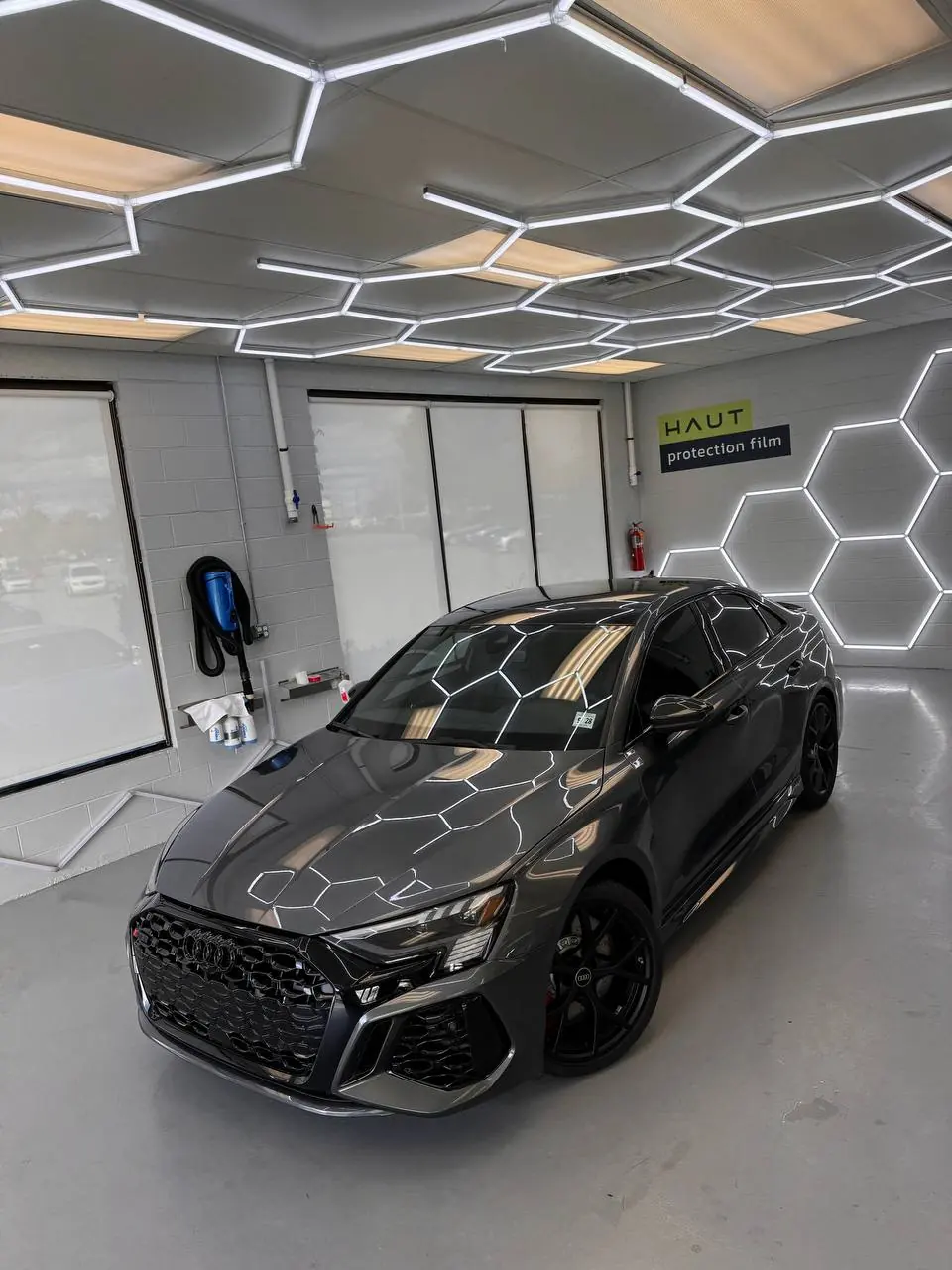
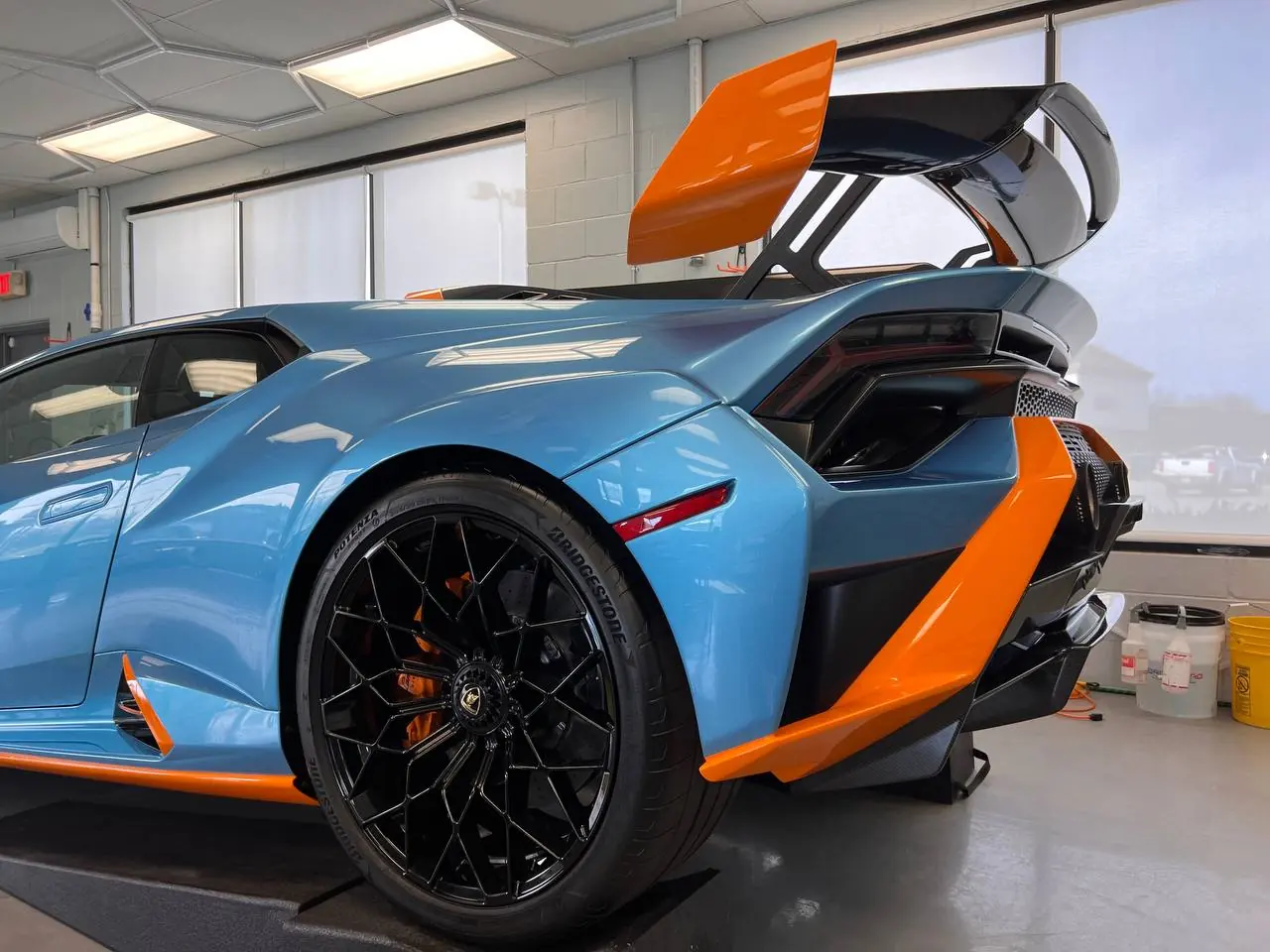
Cars that left a certified bay
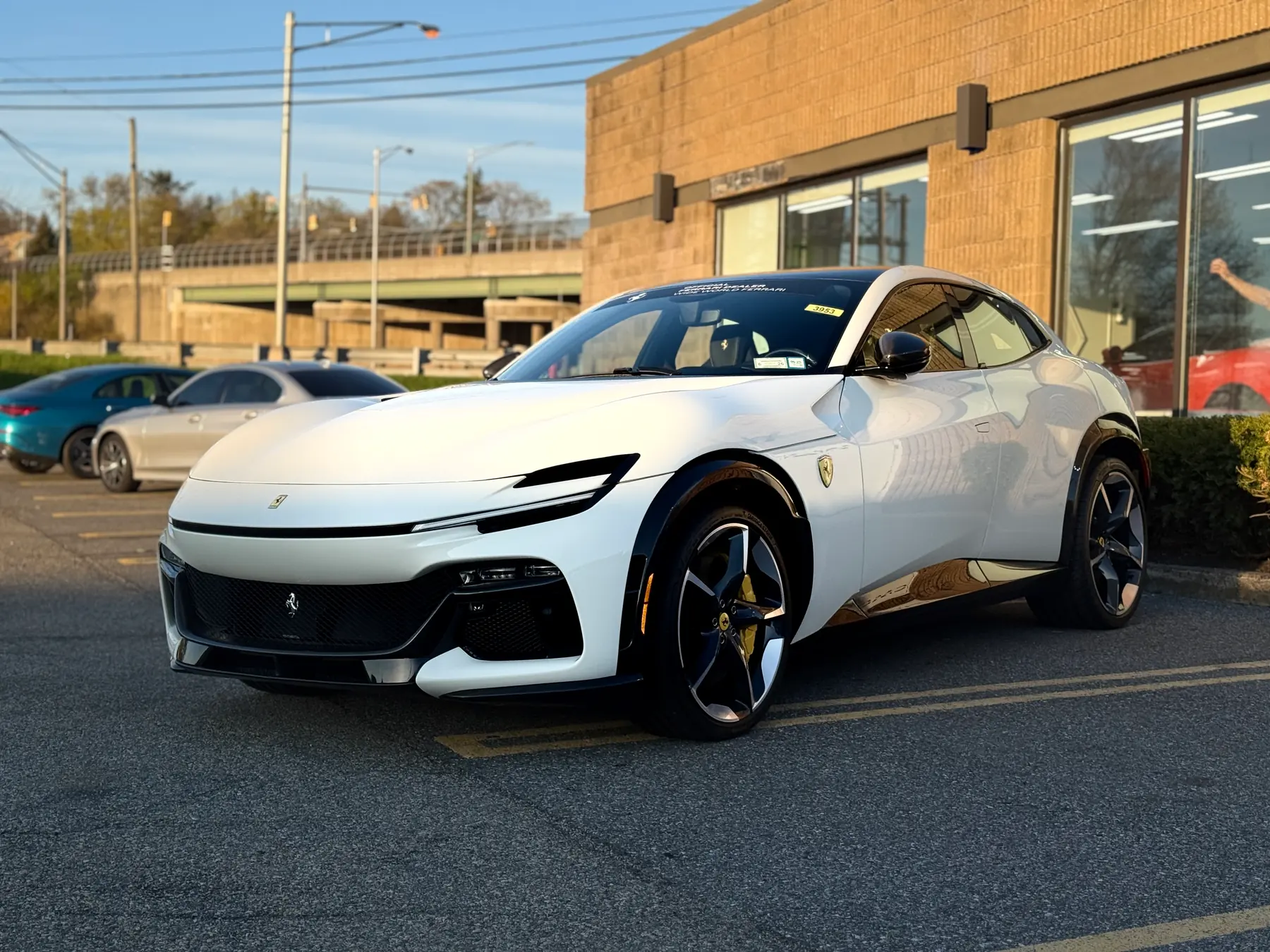
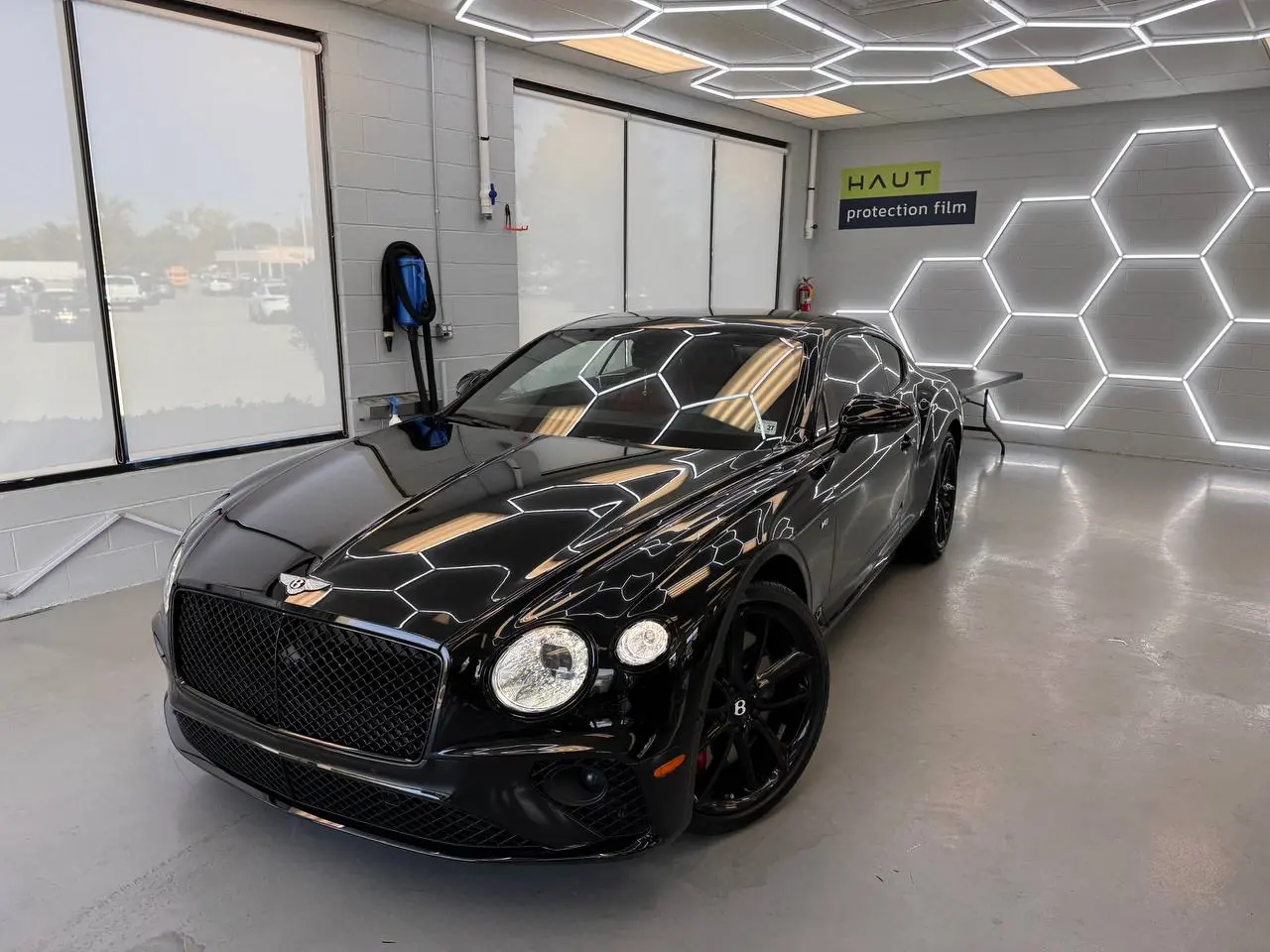
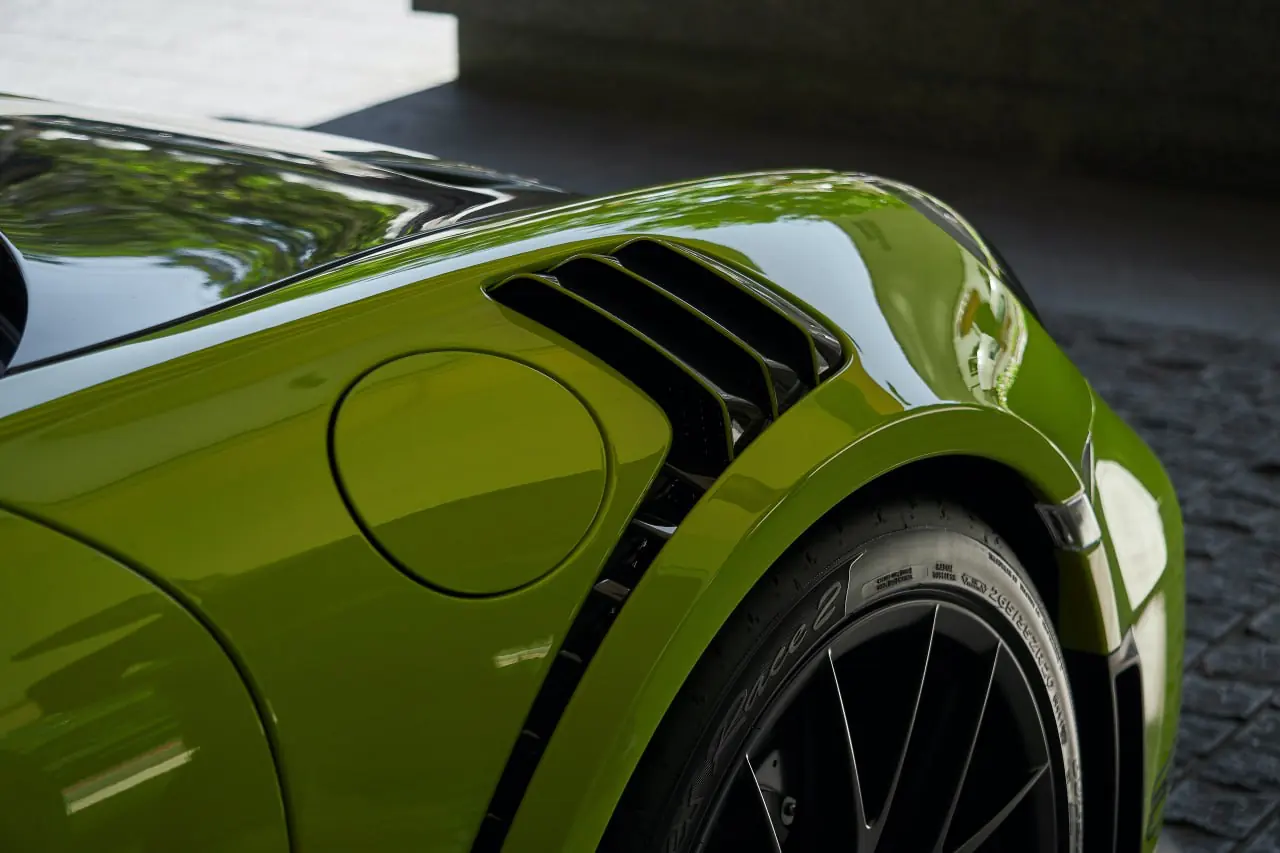
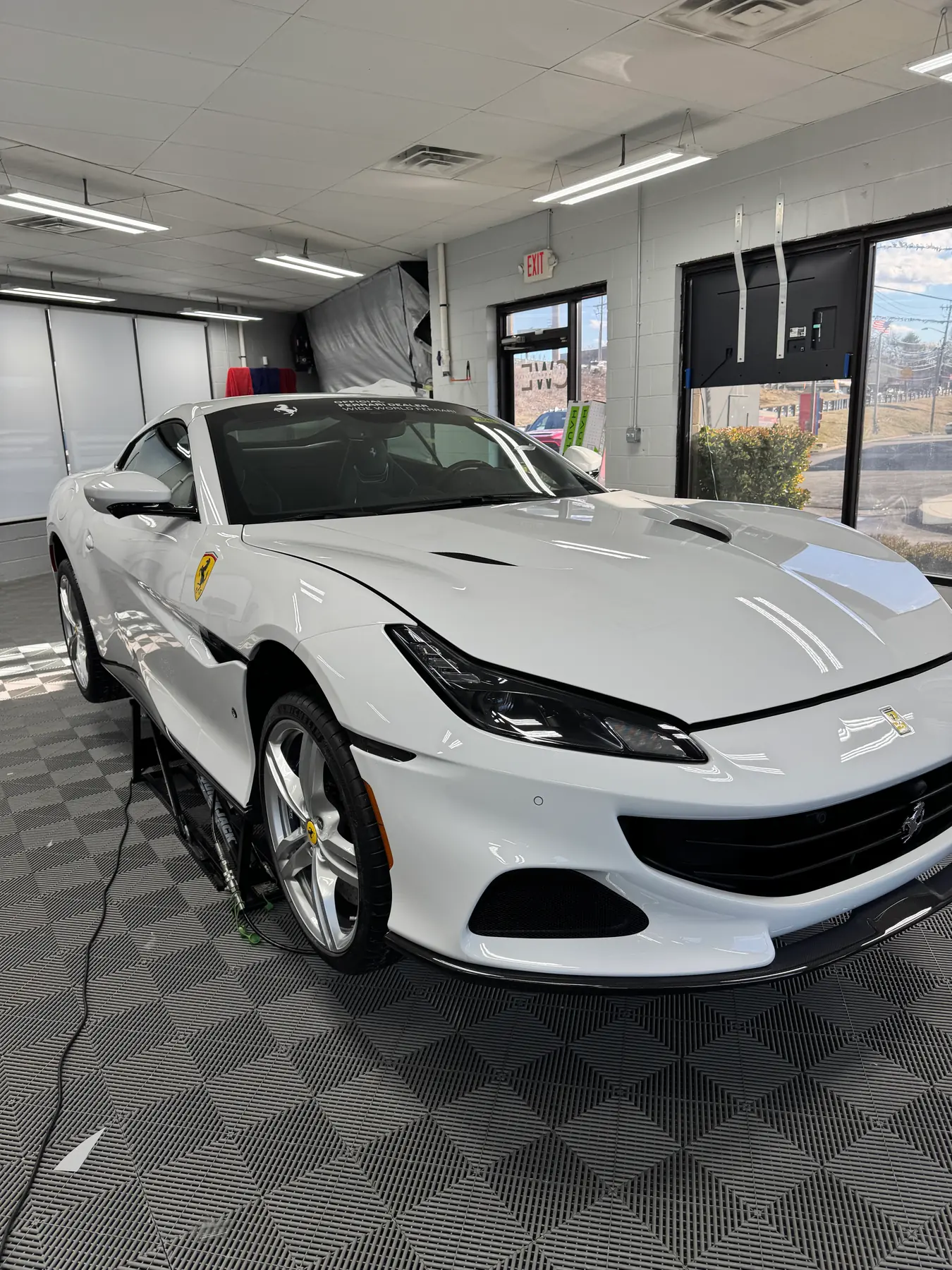
Every car here came through a HAUT installer. No renders, no stock photography.
What happens
From first call to coverage on file
- 01
Get a quote
Tell a certified shop the vehicle and the panels you want covered. They pull your car from a library of 2,500+ patterns and price the real cut.
- 02
Prep the paint
Washed, decontaminated and, where it matters, corrected. Whatever is under the film stays under the film.
- 03
Install
Panels are plotter-cut and wrapped at the edges so no cut line shows. A full front is typically a day; a full body is several.
- 04
Register the warranty
Your installer hands you the job details, you register online in about two minutes, and 10 years of coverage is on file against the vehicle.
Film locks in whatever is underneath it. Any shop that offers to wrap dirty paint is telling you something about the rest of the job.
What to ask before you book
Paint protection film, answered
Talk to us
Questions about film for your car?
- Phone
- (551) 800-2858
- info@haut-usa.com
- Office
- 361 NJ-17, Hackensack, NJ 07601
Get your car covered
Certified shops only — trained on our film, cutting from our patterns, and the only ones whose work carries the 10-year warranty.