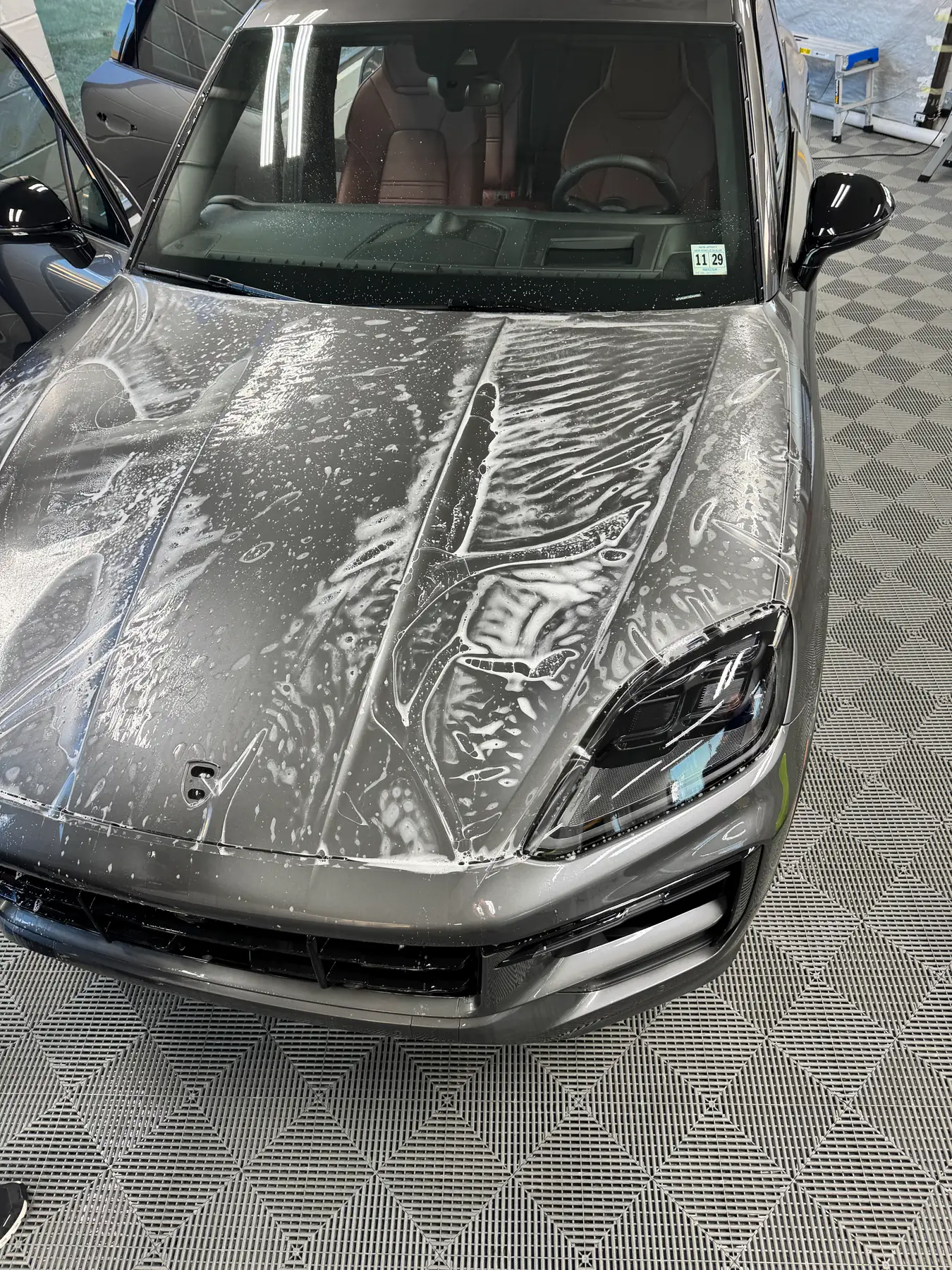
For car owners
What it costs, and how not to overpay
Every brand in this category answers this question with “contact a dealer for a quote”. That is not an answer. Here is what actually moves the number, what belongs on a real quote, and the questions that separate a shop doing the work properly from one that is cheap for a reason.
First, the honest part
We are not going to print a price, and you should be suspicious of anyone who does
Not because it is a secret. Because the same package on two different cars is two different jobs, and a number on a web page can only ever be wrong for yours.
The car changes everything
Panel count, panel size, curvature, how much of the bumper is one compound curve, whether the mirrors come apart, whether the hood is aluminium and flexes. Two cars in the same price bracket can be an eight-hour difference on the bench.
Coverage changes it more
The single biggest lever, and the one you control. A partial front and a full body wrap are the same product and a completely different invoice. Decide coverage before you compare quotes, or you are comparing nothing.
Labour is most of the bill
Film is a real cost, but on most jobs the larger half is hours — prep, disassembly, wrapping edges, and the slow careful part at the end. That is why a shop's rate and its speed both show up in your quote.
Prep is priced separately, and should be
Wash, decontamination, clay, and paint correction where the paint needs it. On a used car this can be a meaningful line of its own. A quote with no prep line has either skipped it or hidden it.
The mechanics
The four things that move your number
In the order they move it. Understand these and you can read any quote in the country.
- 01
Coverage
Partial front, full front, track pack, full body. This choice is worth more than every other decision combined — see the panel-by-panel breakdown before you pick one.
- 02
The vehicle
Panel count and shape. A pattern that has to be cut in more pieces, or stretched around a deep curve, is more bench time whatever the film costs.
- 03
Prep and correction
New car, light decontamination. Three-year-old car with swirls, a full correction first — because whatever is under the film is under it for a decade.
- 04
Disassembly
Bumper off, lights out, handles and badges removed so edges wrap behind the panel instead of stopping on its face. Hours, and the main reason two quotes on the same car differ.
The film itself is the part everybody argues about and the part that varies least. What it should change is what stands behind the job afterwards — a 10-year warranty registered against your vehicle is worth more than one stapled to a receipt you will lose.
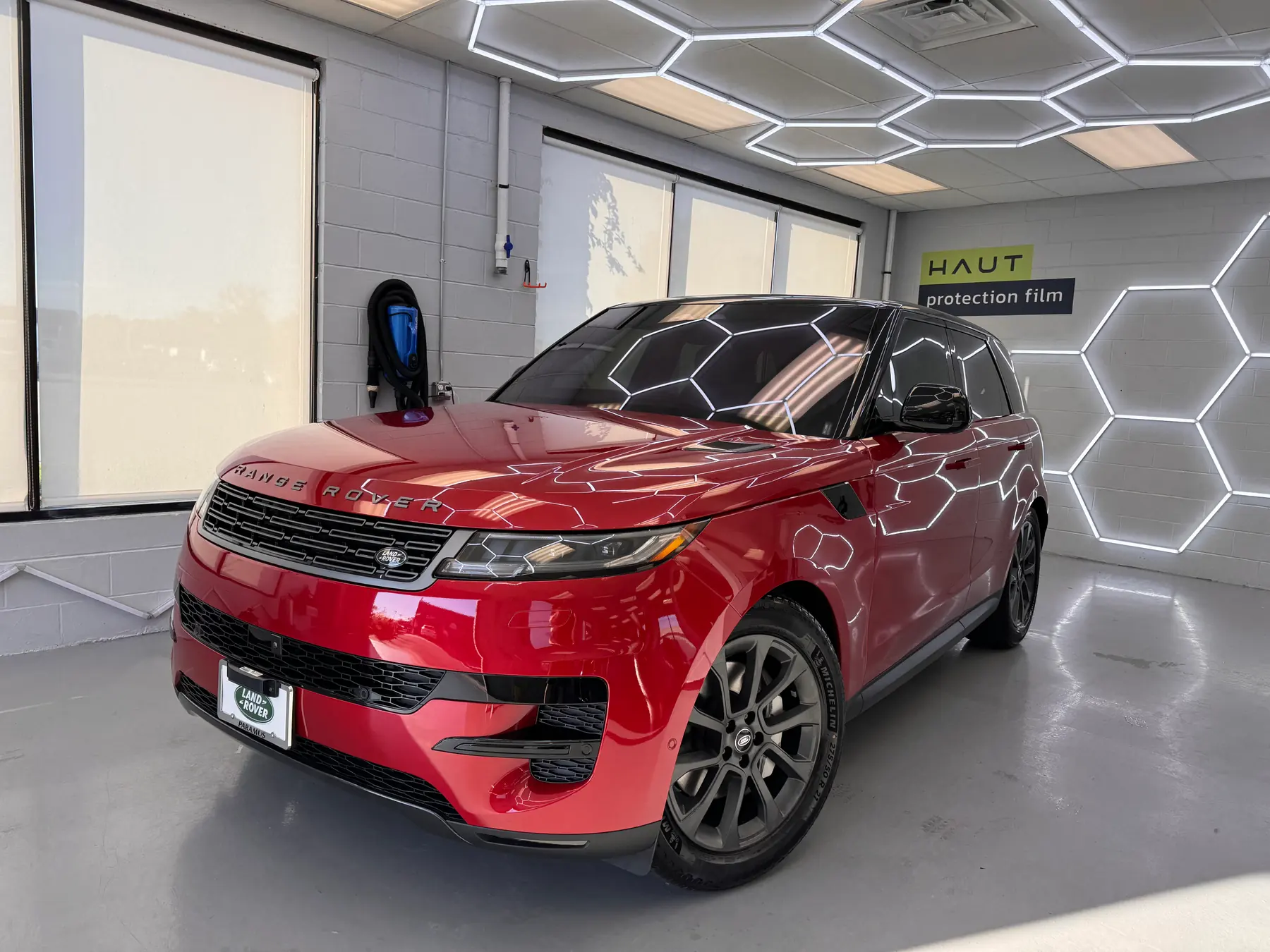
Reading a quote
What a real quote has on it
Ask for it in writing, itemised. A shop doing the work properly has no reason to refuse, and one sentence on a business card is not a quote.
- A panel list — the actual panels being covered, named, not a package label like “front end”.
- Whether edges are wrapped around the panel or trimmed on its face, panel by panel.
- What is being removed: bumper, lights, handles, mirrors, badges — or nothing.
- The film, by name and thickness, and the finish. Not just “ceramic PPF”.
- Prep: wash, decontamination, and whether paint correction is included or extra.
- Any panel they will not warrant, and why — repainted panels are the usual reason.
- How long the car is with them, and how long before you can wash it.
- The warranty term, what it covers, and who registers it — you or them.
- What happens if a panel lifts in six months, and who pays for the redo.
- The deposit, and what it is refundable against.
Before you leave a deposit
Ten questions worth asking out loud
None of these are rude, and a good shop will enjoy answering them. The answers are also how you tell one from a shop that will hand your car back with a dirt line down every panel.
- 01
Can I see a white car you finished more than a year ago?
White and silver expose everything — yellowing, edge lift, dirt lines. A year-old white car is the single most revealing thing a shop can show you.
- 02
Do you wrap the edges, or trim them on the panel?
Trimmed edges are the most-reported failure in this category: they lift, and they collect a black line of dirt you cannot clean out.
- 03
Are you taking the bumper off?
Determines whether the film ends behind the panel or on top of it. It is the difference between an install you cannot find and one you can.
- 04
Has any panel on my car been repainted?
Film pulls repainted panels far more often than factory paint. A shop that checks and tells you before quoting is protecting you; one that discovers it during removal in seven years is not.
- 05
Where do you install — and can I see it?
Dust under film is permanent. The room the car is filmed in matters as much as the hands doing it.
- 06
Who cut the patterns for my car?
A pattern drawn for your exact model beats a generic kit trimmed by hand on your paint. Ask what software and what library.
- 07
What is included in prep, and does my paint need correction?
Whatever is under the film stays under it. A shop that says your three-year-old paint needs nothing is telling you what you want to hear.
- 08
Who registers the warranty, and can I see it in writing before I pay?
Owners get refused on paperwork every day. Read the exclusions before the job, not during a claim.
- 09
If an edge lifts in six months, who pays for the redo?
Most manufacturer warranties cover material, not labour. Ask the shop directly what it does about its own install.
- 10
What happens when it comes off in eight years?
A shop that has removed film knows what to tell you. One that has only ever applied it does not yet know what it is selling you.
Almost every horror story in this category is an install problem, not a film problem.
Which is why the questions above are about the shop, not about the brand
Red flags
What a suspiciously cheap quote is usually hiding
A lower number is not automatically a worse shop. But when a quote comes in thousands under the others, it is normally one of these five, and it is fair to ask which.
Edges trimmed, not wrapped
Faster, cheaper, and the reason the film lifts and collects dirt at every panel edge within a year or two.
Nothing comes off the car
No bumper, no lights, no handles. The film stops at a visible line everywhere, and the corners are the first to fail.
No prep line on the quote
Sealing dirt, swirls and etching under an optically clear layer for the next decade, at a discount.
Cut on the paint
Freehand blade work on a panel instead of a plotted pattern. When it goes wrong it is a scratch in your clear coat, not in the film.
A warranty with no paper
“Lifetime, don't worry about it.” Ask who registers it, against what, and what it excludes. If nobody can show you, it does not exist.
A price without a panel list
The most common way two quotes stop being comparable. If it does not name panels, it is not quoting a job — it is quoting a mood.
Where we stand
What HAUT does and does not control
We are the manufacturer. Being straight about the line between us and your installer is the only way any of the above is useful to you.
What we control
- The film: what it is made of, what it measures, and how long it is warranted.
- The patterns every certified shop cuts from, drawn per model and drawn to wrap edges rather than end on them.
- Who is certified to install it, and what they had to demonstrate to get there.
- The warranty record — registered online against your vehicle, so a claim in year eight starts from our file.
What we do not
- What your installer charges. Every shop sets its own labour rate, and it should.
- Which coverage package is right for how you drive — that is a conversation.
- Whether a previous owner had a panel resprayed. Your shop checks; we cannot.
- How you wash it afterwards, which is the one part of the ten years that is genuinely yours — here is what that involves.
Money, answered
Take these questions to a certified shop
Every HAUT shop is certified by us on our own film and cuts from our own pattern library — and the 10-year warranty only attaches to their work. Tell us the car and your ZIP and we will point you at the nearest one.